my plan for today: telework from home, go see the doctor in the middle of the day. as one does.

then the doctor cancelled on me. then my telework setup didn’t work, so i called my boss like “i’m gonna use a sick day instead”, which is allowed at my work if you’re going to see a doctor, which i was GOING TO DO, so… i’mma be playing civ and petting my cat today while my boss thinks i’m at the doctor’s and the doctor plays hooky or something

… i feel like this has to be against some law or rule or something but also, idgaf.

petermorwood:

dollsahoy:

trickytalks:

trickytalks:

lambdaphagy:

digging-holes-in-the-river:

This is a video about how people used to walk in the middle ages, and how it changed around the 1500s when people started wearing a different kind of shoes.

the modern heel striker vs. the medieval ball strider

This is how I was taught to take steps in winterguard and colorguard. The people with the instruments did a rolling heel-step instead, because it would preserve the clarity of playing a musical note while moving.

It’s probably relevant that winterguard is usually performed barefoot or with soft footwear with no heel support.

Also, runners – especially long-distance runners – are usually taught not to heel-strike. Instead the ideal place to “hit the road” is neither the ball nor the heel – it’s the middle of the foot. 

Short distance runners usually do ball-strike because it’s faster, for many of the reasons described in that video. You’re leaning forwards more so you can use gravity to help propel you forward, and you’re using more muscles in your legs. Heel-striking usually happens because your steps are too large.

In ballroom dance, too, you wear shoes with very soft soles and glide around on the balls of your feet.

I’m looking at this from a writer PoV – it’s fascinating to know about, because it influences the way people move when fighting.

Not just sliding, gliding footwork thanks to soles with much lower grip than modern athletic footwear, but “poise” in both senses – “having poise” as in looking graceful, and “being poised” as in ready for quick movement.

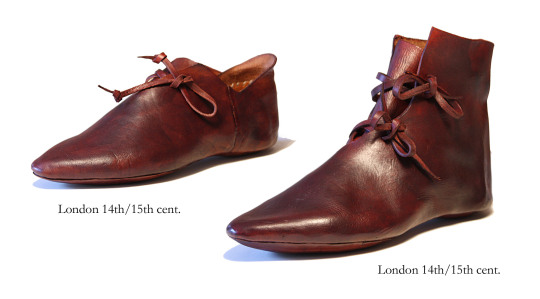
For reference, a clearer view of what turnshoes look like.

image

Rather than an infodump lecture on how the characters are walking on the balls of their feet in soft shoes, show what effect it has on the way they move, and the way they sound – much quieter than in modern shoes. Maybe contrast that to the first time they have to wear something heavier, as disguise, uniform, formal dress, foreign costume etc.

image

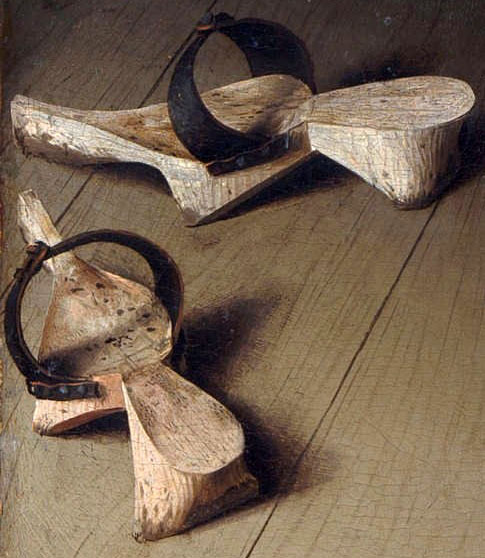
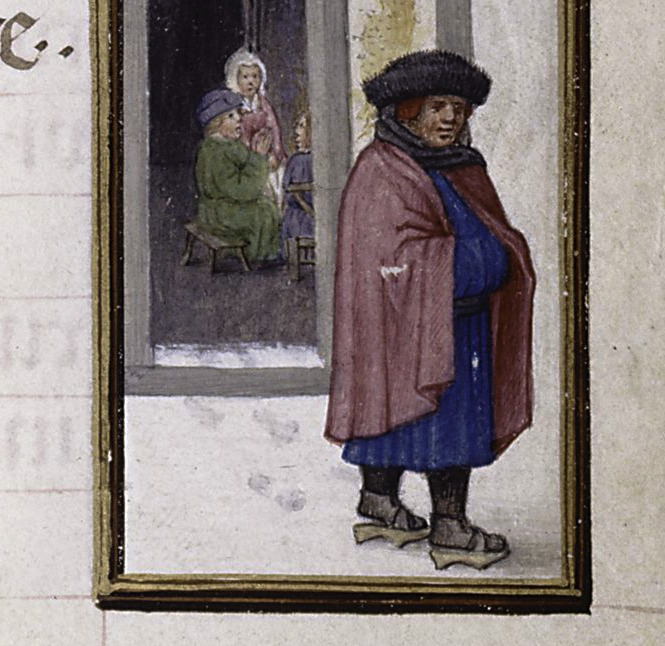
Roland Warzecha also mentioned pattens, wooden outdoor “under-shoes”.

image

A couple of years ago I reblogged a post about sabots (clogs, wooden shoes in general and by extension, pattens) in which I wrote this:

It’s worth remembering that pedestrians going to and fro in a medieval
town (especially in wet or snowy weather) might have been surprisingly
noisy, and that people who went out of their way to be quiet, whether or
not they were dressed all in black, might have been regarded with
suspicion…

Something to bear in mind.