
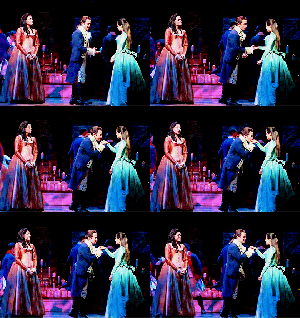
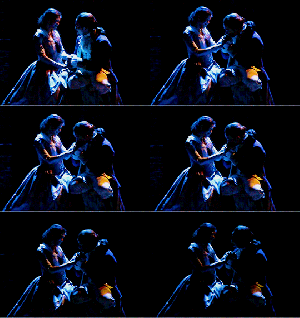
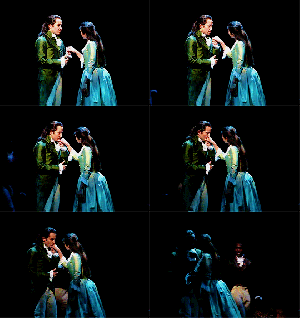
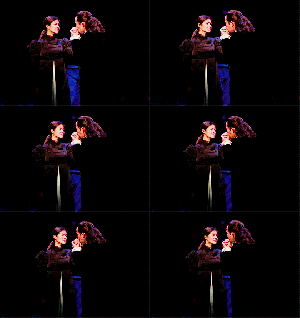
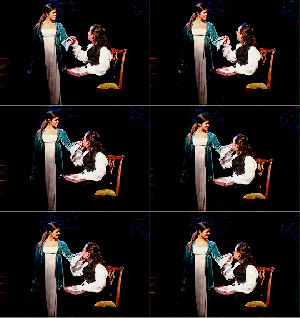
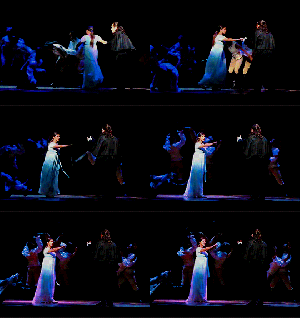
The five times Alexander kissed Eliza’s hand, and the one time he couldn’t.
i’m going to tell you in advance that whenever you ask yourself “oh wow but did she do that one part of the vocals tho?” the answer is always yes. yes i did.
this took an hour. broke out that vocal score and zooted all the way through. please enjoy it.
First Burn is a masterpiece, and there’s one thing in particular I can’t get over. We’re all talking about this incredible, savage quote:
“Your enemies whisper so you have to scream. I know about whispers. I see how you look at my sister.”
It shakes us to the core, it speaks deeper of something we always knew. Eliza might say she doesn’t know who Alexander is, she has so much to learn, but also she knows everything.
Of course, she knows Alexander so so well and she knows better than anyone where to attack him: his writing, his legacy. The final version of Burn shows us that: she goes right for his throat, ‘your sentences border on senseless’ and so on. His obsession with his legacy and ‘you are paranoid in every paragraph how they perceive you’.
But she always knows the rest of his flaws, she knows what Alexander is doing to her. She sees how he is about women, about her own sister. She loves him and sees all the amazing stuff about him, but she sees him entirely, all the bad included. In Satisfied, Angelica says she’d have to be naive to put aside Hamilton’s flaws and intentions. Eliza see his defects too, she also says she’s not naive, she stands by his side but she knows what he is costing her. She knows his power to affect people, herself included: “Don’t take another step in my direction, I can’t be trusted around you”. She sees the effects of his charms on others and in hers, and she is prepared for that, for his words: “Don’t think you can talk your way into my arms”.
And she knows his tendency for self-destruction. Angelica used the Icarus metaphor, but Eliza was already aware of his sense of self preservation, so extreme it easily went sideways, being how he falls. She knew how blind he could be to the things that really mattered, obsessed with his legacy, drowning in his pride. She saw the things he ignored and dismissed, she’s way ahead of him: “When will you learn that they are your legacy? We are your legacy”. This quote speaks to so many things, to Philip’s death, to Alexander’s legacy only surviving thanks to Eliza, to his whole story.
Angelica is not the only Schuyler who can read right through him. Eliza was looking closer, longer, even deeper. And she was right in the eye of the hurricane along with him, the consequences affected her and her family directly. She knew everything, she felt all of it. It’s not hard to understand why she loves him, why she forgives him later, and it’s no wonder at all that she hopes that he burns.
Millionth thought about “Burn” I’ve had this month: Eliza goes for Hamilton’s jugular – but not by repeating the insults we’ve heard before, (arrogant, loud mouthed, obnoxious, son of a whore, bastard, etc…) She rips Hamilton up on the thing he’s most known for, what he’s most proud of – his WRITING. His SENSELESS sentences, his SELF OBSESSED and PARANOID tone. She’s tearing him up about not just the CONTENT of the Reynolds Pamphlet, but the way in which he wrote it. She takes the time in the middle of her rage to mock his style, which is such a rap battle move.
And what is she going to do with all of the beautiful writing he gave her over the years, his letters?
Burn them.
I think about this LITERALLY of the time. About how she pushes the button she knows will kill him.
“not only did you totally drag our names through the mud, and ruin our reputation, it wasn’t. even. your. best. work.”
^^^^^^^^^ killed ‘em ^^^^^^^^^
Okay but that isn’t even the most hardcore part:
The entire play is a fourth wall-breaking battle for narrative control of personal and professional legacy. That’s what it’s about. Conventional wisdom — and basic logic — states that history is written by the winners. Hamilton: An American Musical shows us the battle for that proverbial quill.
Literally the first song tells us “His enemies destroyed his rep/America forgot him” because up until the release of this play, Alexander Hamilton’s legacy was mostly overlooked by the average American, largely thanks to folks like Jefferson and Madison underselling his contributions after he died.
(This is also why Jefferson isn’t shy and awkward in the play. While that would have been historically accurate, the point is that the modern perception of Jefferson is that he’s a Big Fucking Deal. Because he made himself look that way.)
So the characters on stage are constantly fighting to make their version of events the version of events.
Burr is the narrator because this is his opportunity to tell his side of things. “History obliterates in every picture it paints, it paints me in all my mistakes.” He’s saying that in the end he LOST the fight for narrative control. And yet — and here’s the fucking amazing part — the mere act of explaining this to the audience CHANGES OUR PERCEPTION OF BURR and alters his place in history. God Lin is too smart for his own goddamn good.
(“History has its eyes on you,” Washington says, putting a very fine point on things. And if you don’t think he also means there’s an audience sitting watching this play, you’re not paying attention.)
So, let’s talk about Alexander, his obsession with legacy, and his tried and true method for controlling the narrative:
Writing.
In “Hurricane” he says “I’ll write my way out! Write everything down far as I can see! … Overwhelm them with honesty! This is the eye of the hurricane, this is the only way I can protect my legacy!”
“It doesn’t work” you might say, going by the contents of “The Reynolds Pamphlet.” Except… it kinda does. “At least he was honest with our money!” the company sings. Which was really Alexander’s main concern, after all. Think of his priorities in “We Know” where his first instinct is to gloat because “You have nothing!” It’s not until a beat later that he even considers Eliza.
He published the Reynolds Pamphlet because he didn’t want people to think he was disloyal to the United States. His concern was with his professional legacy. And in that sense… he succeeded.
(He succeeded in another way, too. Listen to “Say No To This.” (God I could write a 40 page paper on that song alone.) This is where we actually hear the contents of the Reynolds Pamphlets. And how does the song begin? With Burr explicitly handing narrative control to Alexander Hamilton. “And Alexander’s by himself. I’ll let him tell it.”
Every line of dialogue from Maria is prefaced with Hamilton saying “she said.” That’s because HAMILTON IS WRITING HER DIALOGUE. Hamilton is creating this character of a sultry seductress in red, coming to him when he was weak and luring him to adultery. Maria Reynolds in the play not a character, she’s a fantasy, created to excuse Hamilton’s transgressions.
It’s worth noting at this juncture that Maria Reynolds, the real woman, wrote her own pamphlet. No one would publish it. She was silenced. And Hamilton’s depiction of her as a morally corrupt temptress became the dominant narrative.
So suck on that literally any time you want to fucking blame Maria for Hamilton’s affair: good job, you’ve bought into a serial adulterer’s lies about a battered woman. Also don’t do that, I swear to god I will come for you.)
SO. What does any of this have to do with Burn?
In the very end, it’s revealed that it wasn’t Jefferson or Burr or Hamilton in control of the Almighty Narrative.
It was Eliza.
The very last second of the play is Alexander Hamilton turning Eliza to face the audience. She sees the people watching, and she gasps. Because she did this. She’s the reason this play exists. She’s the reason Lin Manuel Miranda is telling us a damn thing about Alexander Hamilton, she’s the reason Hamilton got a massively popular zeitgeist musical.
Now. Throughout the course of the play Eliza sees all these people weaving their important stories and she thinks she’s somehow… outside. She’s not a statesman, she’s not brilliant like Angelica, she’s just a wife and a mother and she has no place among these giants. At one point she LITERALLY ASKS HER HUSBAND TO BE INCLUDED I’M GONNA SCREAM.
And yet she never had to ask. She was in control the whole time.
And how, how did she do it? How did she “keep” Alexander’s “flame?” By collecting and preserving everything he WROTE, of course. Making sense of it all. She spent fifty years on the project. Everything she collected BECAME THE NARRATIVE.
But you know what wasn’t in there?
That’s right: those letters she burned.
So she didn’t just insult him, oh noooo. Eliza WHOLESALE OBLITERATED A PIECE OF ALEXANDER HAMILTON FROM THE NARRATIVE.
And not just any piece. “You built me palaces out of paragraphs, you built cathedrals,” she sings. In “Hurricane” Hamilton lists his letters to Eliza among his greatest accomplishments, (conflating his writing them with actually BEING HER HUSBAND, god what a self-centered prick). “I wrote Eliza love letters until she fell.”
Eliza says: “I’m burning the memories, burning the letters that might have redeemed you.”
The best pieces of Alexander Hamilton: gone.
God I’m gonna go curl up in a ball and freak out about this some more. FUCK.
Sebastian and Hamilton Act I
madison: there’s only one thing worse than dying
madison: [rips off card so it says ‘jefferson dying’] boom
hamilton: [gasp] JEFFERSON
madison: no
Millionth thought about “Burn” I’ve had this month: Eliza goes for Hamilton’s jugular – but not by repeating the insults we’ve heard before, (arrogant, loud mouthed, obnoxious, son of a whore, bastard, etc…) She rips Hamilton up on the thing he’s most known for, what he’s most proud of – his WRITING. His SENSELESS sentences, his SELF OBSESSED and PARANOID tone. She’s tearing him up about not just the CONTENT of the Reynolds Pamphlet, but the way in which he wrote it. She takes the time in the middle of her rage to mock his style, which is such a rap battle move.
And what is she going to do with all of the beautiful writing he gave her over the years, his letters?
Burn them.
I think about this LITERALLY of the time. About how she pushes the button she knows will kill him.
“not only did you totally drag our names through the mud, and ruin our reputation, it wasn’t. even. your. best. work.”
^^^^^^^^^ killed ‘em ^^^^^^^^^
Okay but that isn’t even the most hardcore part:
The entire play is a fourth wall-breaking battle for narrative control of personal and professional legacy. That’s what it’s about. Conventional wisdom — and basic logic — states that history is written by the winners. Hamilton: An American Musical shows us the battle for that proverbial quill.
Literally the first song tells us “His enemies destroyed his rep/America forgot him” because up until the release of this play, Alexander Hamilton’s legacy was mostly overlooked by the average American, largely thanks to folks like Jefferson and Madison underselling his contributions after he died.
(This is also why Jefferson isn’t shy and awkward in the play. While that would have been historically accurate, the point is that the modern perception of Jefferson is that he’s a Big Fucking Deal. Because he made himself look that way.)
So the characters on stage are constantly fighting to make their version of events the version of events.
Burr is the narrator because this is his opportunity to tell his side of things. “History obliterates in every picture it paints, it paints me in all my mistakes.” He’s saying that in the end he LOST the fight for narrative control. And yet — and here’s the fucking amazing part — the mere act of explaining this to the audience CHANGES OUR PERCEPTION OF BURR and alters his place in history. God Lin is too smart for his own goddamn good.
(“History has its eyes on you,” Washington says, putting a very fine point on things. And if you don’t think he also means there’s an audience sitting watching this play, you’re not paying attention.)
So, let’s talk about Alexander, his obsession with legacy, and his tried and true method for controlling the narrative:
Writing.
In “Hurricane” he says “I’ll write my way out! Write everything down far as I can see! … Overwhelm them with honesty! This is the eye of the hurricane, this is the only way I can protect my legacy!”
“It doesn’t work” you might say, going by the contents of “The Reynolds Pamphlet.” Except… it kinda does. “At least he was honest with our money!” the company sings. Which was really Alexander’s main concern, after all. Think of his priorities in “We Know” where his first instinct is to gloat because “You have nothing!” It’s not until a beat later that he even considers Eliza.
He published the Reynolds Pamphlet because he didn’t want people to think he was disloyal to the United States. His concern was with his professional legacy. And in that sense… he succeeded.
(He succeeded in another way, too. Listen to “Say No To This.” (God I could write a 40 page paper on that song alone.) This is where we actually hear the contents of the Reynolds Pamphlets. And how does the song begin? With Burr explicitly handing narrative control to Alexander Hamilton. “And Alexander’s by himself. I’ll let him tell it.”
Every line of dialogue from Maria is prefaced with Hamilton saying “she said.” That’s because HAMILTON IS WRITING HER DIALOGUE. Hamilton is creating this character of a sultry seductress in red, coming to him when he was weak and luring him to adultery. Maria Reynolds in the play not a character, she’s a fantasy, created to excuse Hamilton’s transgressions.
It’s worth noting at this juncture that Maria Reynolds, the real woman, wrote her own pamphlet. No one would publish it. She was silenced. And Hamilton’s depiction of her as a morally corrupt temptress became the dominant narrative.
So suck on that literally any time you want to fucking blame Maria for Hamilton’s affair: good job, you’ve bought into a serial adulterer’s lies about a battered woman. Also don’t do that, I swear to god I will come for you.)
SO. What does any of this have to do with Burn?
In the very end, it’s revealed that it wasn’t Jefferson or Burr or Hamilton in control of the Almighty Narrative.
It was Eliza.
The very last second of the play is Alexander Hamilton turning Eliza to face the audience. She sees the people watching, and she gasps. Because she did this. She’s the reason this play exists. She’s the reason Lin Manuel Miranda is telling us a damn thing about Alexander Hamilton, she’s the reason Hamilton got a massively popular zeitgeist musical.
Now. Throughout the course of the play Eliza sees all these people weaving their important stories and she thinks she’s somehow… outside. She’s not a statesman, she’s not brilliant like Angelica, she’s just a wife and a mother and she has no place among these giants. At one point she LITERALLY ASKS HER HUSBAND TO BE INCLUDED I’M GONNA SCREAM.
And yet she never had to ask. She was in control the whole time.
And how, how did she do it? How did she “keep” Alexander’s “flame?” By collecting and preserving everything he WROTE, of course. Making sense of it all. She spent fifty years on the project. Everything she collected BECAME THE NARRATIVE.
But you know what wasn’t in there?
That’s right: those letters she burned.
So she didn’t just insult him, oh noooo. Eliza WHOLESALE OBLITERATED A PIECE OF ALEXANDER HAMILTON FROM THE NARRATIVE.
And not just any piece. “You built me palaces out of paragraphs, you built cathedrals,” she sings. In “Hurricane” Hamilton lists his letters to Eliza among his greatest accomplishments, (conflating his writing them with actually BEING HER HUSBAND, god what a self-centered prick). “I wrote Eliza love letters until she fell.”
Eliza says: “I’m burning the memories, burning the letters that might have redeemed you.”
The best pieces of Alexander Hamilton: gone.
God I’m gonna go curl up in a ball and freak out about this some more. FUCK.
Extras from the Hamilton episode of Drunk History featuring Lin-Manuel Miranda
- Burr earning Washington’s scorn
- Hamilton’s falling out with Washington
- Lin saying motherfucker many many times (uncensored, thank you @god)
- Lin’s drunk voicemail freestyle for Alex Lacamoire
HamilPotter: The Ten Duel Commandments
She [Soo] points out one in particular [fanart] that’s framed above her mirror. It’s Eliza with a word collage drawn around her. A young, Asian girl sent it to Soo because she was so happy to see someone like herself represented onstage.
“That’s just one example of how many young Asian women who have been like, ‘Thank you so much, you are representing me,’” Soo says. “Mixed women tell me they never felt like there was a place for them in the theater, and now there is. It’s just really important for them to be able to see it, and know that it’s not just a dream. You can pursue it.” – Phillipa Soo for Broadway Style Guide, June 2016
 what i do is not up to you