
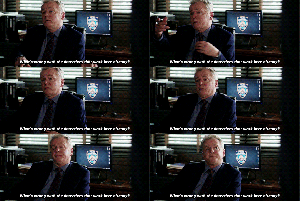




Watson and I feel that, in order to do our best work, the chemistry needs to be right.
#see THIS is what makes Sherlock in Elementary so unique#a lot of versions of Sherlock#or pretty much Any modern crime drama would have the brilliant detective calling the other detectives ‘idiots’#or ‘amateurs’ or basically insulting their intelligence and ability as detectives#here Sherlock is both acknowledging their skill as detectives and crediting that to their Captain’s leadership#while also acknowledging that he can’t work with them because THEY don’t like him#all the while he is accepting as fair because he’s self-aware to know he’s not easy to work with#there are ways to depict an anti-social genius without being a huge asshole to everyone#and this is it
Like….
I keep seeing Elementary described as “good” or “okay” or “solid”, but not “great” – its reception seems to mostly be as a decent, but not extraordinary procedural.
Except on places like Tumblr and Dreamwidth, where the majority of people discussing it are women – where, I think, the audience is more aware of the problems with a lot of other portrayals of (mostly male) antisocial geniuses. The trope regularly conflates intelligence with dominance. The assholishness is an expression of that. Treating other people like crap is a dominance display; the character is demonstrating that others are below their consideration, and for a large part, the narrative itself buys into it.
It’s a very gendered trope. Think of awkard female geniuses in popular culture. Temperance Brennan from Bones is a good example. She can be clueless about others’ feelings, but she’s not an asshole; part of her characterization is that she is, in fact, caring, even though she’s not great at expressing that sometimes. She’s not constantly set up as a dominant figure even though she’s the protagonist. Other characters make valuable contributions to cases, she has friendships she values, and becomes romantically involved with a non-genius.
The portrayal of Sherlock Holmes in Moffat’s Sherlock is a male power fantasy. It just doesn’t involve guns and ripped abs. Instead, it involves subjugating others through vast intelligence. When you’re so much better than everyone else, treating them terribly is justified. It’s the one steady piece of characterization that you can rely on in that inconsistently written, over-produced pile of shit. Sherlock is better than everyone, even – or perhaps especially – women like Irene Adler, who outsmarted him in the books but couldn’t be allowed to do so in the show. She had to be stripped (literally) of her power and made, instead, to be in awe of Sherlock’s massive
peenintellect.The portrayal of Sherlock Holmes in Elementary could have been a male power fantasy. Instead he’s more like Temperance Brennan. His intelligence is treated as an extraordinary asset, but the show doesn’t buy into the myth that this makes him better than everyone else. Other characters make valuable contributions. They’re allowed to solve things, too, instead of just being hindrances to be mocked. Sherlock himself grows. He faces consequences for being an asshole, and learns from them – he even apologizes. He has social connections that he values. The show frequently undercuts or subverts what you normally expect from the “antisocial male genius” trope.
I’m not saying it’s the greatest procedural ever made, or even the greatest interpretation of Sherlock Holmes. I’m just saying that some of its choices are a lot more radical than (mostly male) critics seem to recognize.
 what i do is not up to you